The Nsenga New Testament is Launched!
The event we’ve been working towards for over five years has finally been celebrated! The Word of God is now available in the Nsenga language.
Here are some pictures of the launch celebration. (Click for larger versions.)
-

- Chiefs bring the NTs to the altar
-

- Dancing for joy!
-
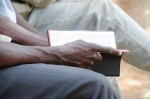
- The Word of God in the hands of the people
-

- Our translator, Father Kapomba
-
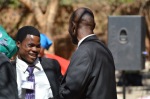
- Choir members celebrating
-
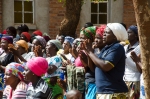
- Welcoming the NT with applause
-

- Joy!
-

- God’s Word for All
See more pictures and more in our Summer Newsletter!
First Look
Today the Nsenga Bible Translation Project Committee got their first look at the published Nsenga New Testament.
It looks simple on the outside, but everyone understands the miracle that this small book is.
Celebrate with us tomorrow, July 14th, as we Launch and Dedicate the New Testament in the Nsenga language.
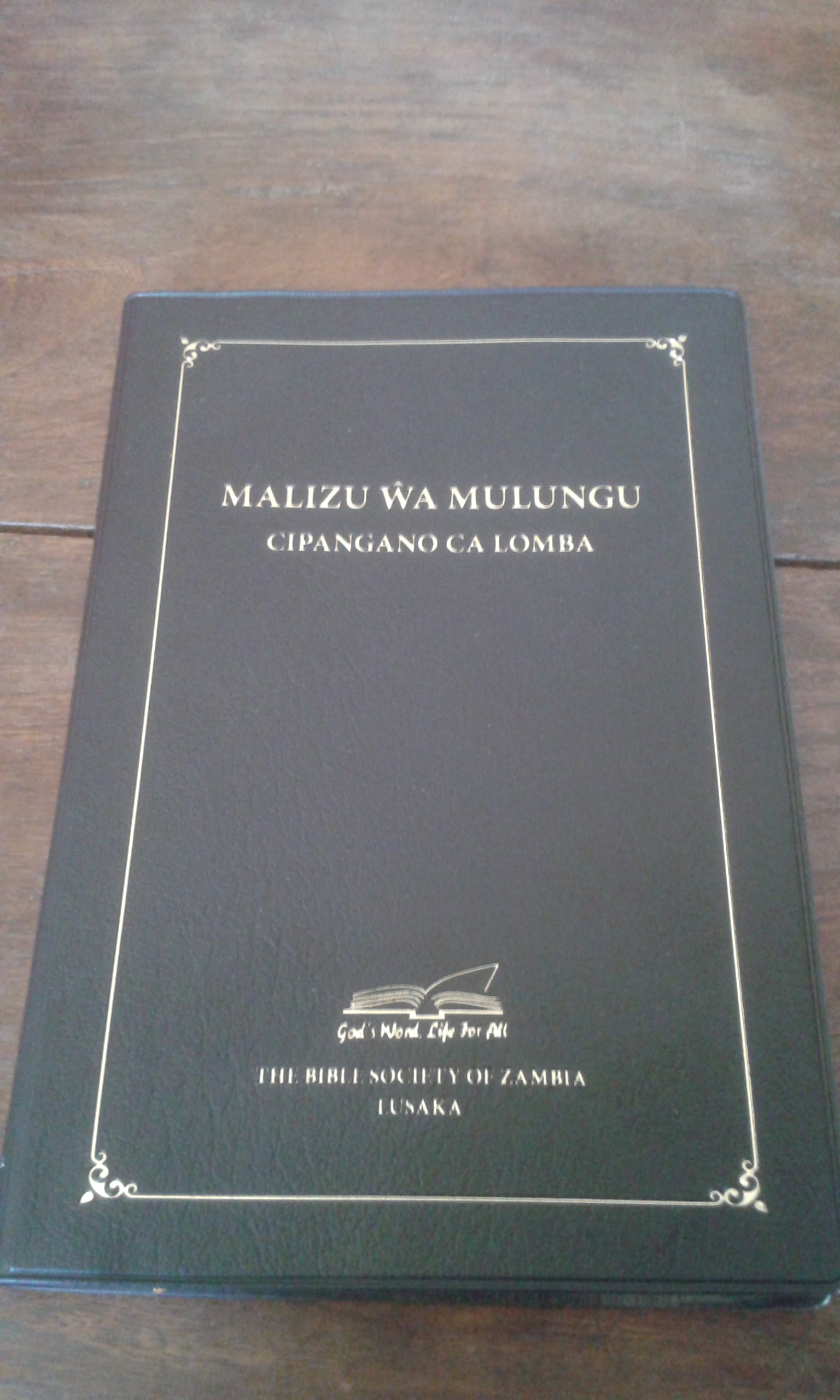
Nsenga New Testaments Have Arrived!
We have been informed that 1000 copies of the Nsenga New Testament arrived today at Lusaka International Airport in advance of our Launch & Dedication Service on July 14th. (The rest of the shipment is on its way by boat.) Rejoice that the Nsenga people are ~2 weeks away from having God’s Word in the language of their hearts!
Nsenga Choir Music
In preparation for the Nsenga New Testament Launch and Dedication Service on July 14, 2016, a special choir has been formed. Drawing on members of choirs from many different churches around Petauke, the Nsenga Select Choir has been hard at work composing special songs in Nsenga to commemorate this awesome day. Below are links to audio files of the five songs, along with lyrics and translations. (See if you recognize the tunes to songs 4 and 5!) Please feel free to share these songs, and please pray for the Nsenga people as they prepare to receive the New Testament in their heart language.
Song 1 – Mwe Nyamalenga Sewo Tatembezya
Lyrics:
Mwe Nyamalenga sewo tatembezya
pamwetipa sewo Ansenga
Nsenga Baibo yasu iyi
Nyamalenga tusenga
mutipe mphamvu na nzelu
notisukisha soti
Nyamalenga nimwe akulu cendi
Tusenga mashukisho ŵanu
Translation:
Oh Creator-God we say thank you
for giving us Nsenga people
Our Nsenga Bible – this one!
Creator-God, we ask
you to give us power and wisdom
and you bless us again
Creator-God you are truly great
We ask for your blessings

Song 2 – Mwe Mulungu Nyamalenga
Lyrics:
Mwe Mulungu Nyamalenga sewo tutembezya pakuti
Mwecisotiyavya kuyaluzya Cisenga casu, Ŵata Mwe
Mwituma Akilisi na yawo kuzotiyavya
kuti tomvwisha popenda Malizu ŵanu, Ŵata Mwe
Tusenga mashukisho, tusenga na nzelu
pali nchito mwatipa
Tutemwelela, sewo tutembezya
pali nsiku ya lelo
Translation:
Oh God the Creator we thank you because
You have come to help us translate our Nsenga language, Oh Father
You sent Chris and others to help us
so that we can understand how to read your Word, Oh Father
We ask for blessing, we ask for wisdom
for the work which you have given us
We are very happy, we thank you
on this very day

Song 3 – Tili na Nsansa
Lyrics:
Tili na nsansa, tili na cintemwa
Tutemwelela sewo Tansenga
Pali Nsenga Baibo mwatipa
Tutemwelela sewo Tansenga
Translation:
We are happy, we have joy
We are very happy, we Nsenga people
Because the Nsenga Bible you have given
We are very happy, we Nsenga people
Song 4 – Titemwelele Sewo Tonse
Lyrics:
Aleluya!
Titemwelele sewo tonse
Potipasa moyo wa mphamvu
Titembezye Nyamalenga. Aleluya!
Nsiku ya lelo titembezye
Potilola sewo Ansenga
Kuyaluzya malizu ŵa m’buku iyi. Aleluya!
Translation:
Alleluia!
Let us all be very happy
Because you have given us powerful life
We praise the Creator-God. Alleluia!
Today let us give thanks
For allowing us Nsenga
To translate the words of this book. Alleluia!

Song 5 – Mwe Mulungu, Mwe Nyamalenga Ŵasu
Lyrics:
Mwe Mulungu, Mwe Nyamalenga ŵasu
Tusenga m’tishukishe
Notipa cawanzi canu
Notilelelela
Tipe Mzumu, tipe nzelu
Sewo Tansenga tonse
totemwana kwene kanthu
Translation:
Oh God, Oh our Creator-God
We ask you to bless us
And to give us your gifts
And take care of us always
Give us Spirit, give us wisdom
All of us Nsenga people
Let us love each other with no limits

(And, yes, I do get mentioned by name in Song 2. It’s a little embarrassing, but at the same time a great honour to know that my small contribution has helped people understand God’s Word in a new way.)
Mixed Feelings
It is with strongly mixed feelings that we announce that Chris has received and accepted a Divine Call to be the Spanish instructor at Great Plains Lutheran High School in Watertown, South Dakota.
We are very excited for this new opportunity for service and adventure in the Lord’s kingdom. Great Plains is a young, growing school with many opportunities for all three of us to use our gifts and to grow together in a new ministry situation. Chris’ first day at GPL will also be Sean’s first day of high school, and it is great that we will all have the chance to be together for Sean’s high school years. Chris is also looking forward to teaching the Introduction to Christianity course for GPL’s international students. We are looking forward to being back in the United States, closer to family and friends (and with the chance to see some snow this winter).
At the same time, we are sad to be leaving our lives here in Zambia, the friends we’ve grown so close to over the last four years, and the work of the Nsenga Bible Translation Project. We will miss the people and the life that we are surrounded with, and the day-to-day joys and challenges that come with working on a project as complicated as Bible translation in rural Africa. We pray for God’s blessing on the Nsenga Old Testament project, which has just barely started to get off the ground. We pray that the newly-trained translators (and the remaining “veteran”) will be able to continue working under the guidance of the Nsenga committee and the direction of the Bible Society of Zambia to someday complete a full Bible for the Nsenga people.
Still, with the recent completion of the Nsenga New Testament and the Launch and Dedication service in July, along with Sean starting high school this fall, we knew this was the right time for our family to transition back to the US and to a new area of ministry. As a colleague said, “You have done what you came here to do.”
We thank all of you who have helped, supported, and prayed for us over the past six years of preparation, travel, study, and work with the Nsenga Bible Translation Project. Thanks to your support, our team was able to complete the translation of the New Testament into a brand-new language. Over a million people now have access to God’s Word in the language of their hearts — something they did not have before, and something they would not have without the dedicated efforts of hundreds of people working to carry out and support the translation work.
We will still be in Zambia until mid-July. Sean still has one more term of school at Rift Valley Academy in Kenya. Chris still has some work to do with the translation team to make sure they are well-prepared to move ahead with the Old Testament work. Janine has many things on her plate as she coordinates our two transitions – out of Zambia and into the US. There is still the Launch and Dedication service on July 14th to plan and prepare for and celebrate. Please continue praying for us until we are back home together safely (and longer, of course, as you think of us). As the Lord enables you, please also continue financially supporting our family until the very end of our time with LBT, at which point we will provide you with information on other missionaries and translation projects to which you can contribute if you desire to continue supporting the work of Bible translation, until we reach our goal of making God’s Word accessible to everyone in the language of their heart.
Thank you again for your partnership with us in this season of ministry as missionary Bible translators. We are so thankful to God that he has enabled us to work and walk together in this amazing journey, and that he has blessed us with success in producing a New Testament in the Nsenga language. May our gracious God continue to bless you until you join the heavenly throng in heaven, from every “nation, tribe, people, and language” praising Jesus our Lamb and Shepherd.
In Christian Love,
Chris, Janine, and Sean Pluger
Solar Project Update
We are so happy to report that our solar panel system is now up and running!
We received clearance to purchase the equipment we needed, even though our fund was not yet full. Because we (really, you our donors) have a history of fully-funding projects, LBT allowed us to borrow internally so that the equipment could be installed ASAP, confident that incoming donations will finish off the project soon.
Below are some photos of the installation process. As you can see, it was pretty involved.
First, eight batteries (each almost the same size as a car battery) were mounted on a rack on top of the closet in our spare bedroom. They were wired together to produce 4 battery banks of 24V each.
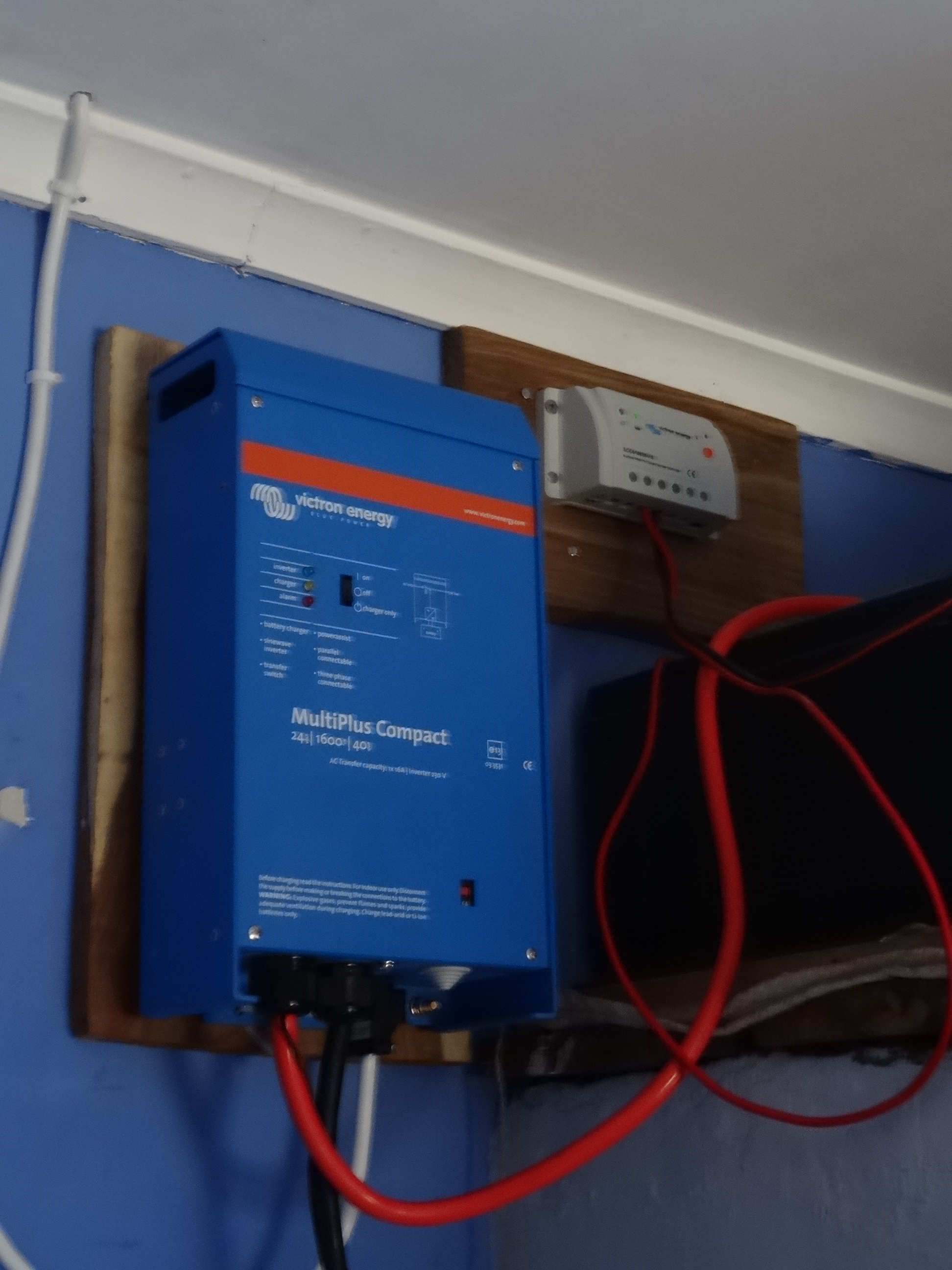
The batteries then got hooked to the big blue machine on the wall, which is an inverter. It converts 24V DC current from the batteries into 220V AC to power our stuff. (It can also charge the batteries from the mains current, if it’s cloudy or rainy and the power is on.)
The small white gadget on the wall is a charge controller. This is connected to the solar panels on the roof and the batteries in the house, and prevents the batteries from becoming over- or under-charged.
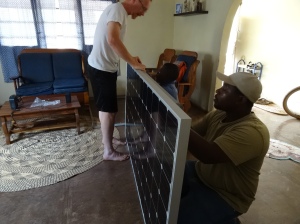
The solar panels themselves are much bigger than we were anticipating. They had to ride all the way from Lusaka hanging out the back of our pickup.
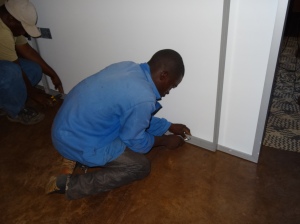
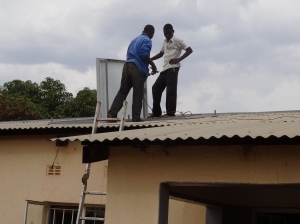
To mount the panels properly, they had to first be fitted to custom-made metal frames before being put on the roof. One half of the frame was bolted to the solar panel, the other half mounted to the roof. Then the two halves of the frame were bolted to each other. This involved some rather awkward posturing on the pitched roof as the workers got into position to mount the frames.
For those of you interested in the numbers and specs, we have eight 102 amp-hour batteries, a 1600Va / 16 amp inverter, a 20 amp charge controller, and two 300Wp solar panels. Basically this gives us a 4000 Watt-hour system, which means we can run 400W of appliances for up to 10 hours at a time before the batteries need to be charged again.
For those of you who just care how it works, it works great! We can run our fridge and fans, charge our computers and phones, and generally carry on with life as usual even when the power is out. With moderate use, the panels are enough to keep the batteries charged all on their own. And if we need to run a few more things for a longer period of time, the batteries can still be fully charged in about 6 hours with panels + mains.
The day after the solar was installed began some of the worst power cuts to yet hit us – we had about 5 days of 16-18 hours power cuts per day, meaning we were without power much more than we had it. Nevertheless, with the solar panels and batteries we were able to keep everything running, the fridge cool, and the fans blowing around the clock.
We want to thank each and every person who has so far donated to our solar project, and for those of you who will still donate in the near future. We have had seventeen gifts come in so far, totaling almost half of what is needed. For those of you who still want to contribute, you can follow this link to give to the Pluger Solar Project. More than that, we want to thank you for the show of support and interest we have gotten via email and social media – it’s a true blessing to know how many people care about us, our well-being, the progress of our translation project, and even our hot-season comfort levels.
Thank you, and may God continue to give you his mercy and grace!
-

- Inverter and Charge Controller
-
- The panels were bigger than we thought

-
- Mounting the panels on the frame

-

- Discussing placement

-

- Bolting the frame in place

-

- Up it goes!

-
- On the roof

-

- Making the connections

-
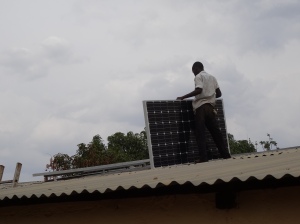
- Almost finished

-

- The battery bank

-

- The view from inside

Fall Newsletter
Click this link to read our Fall Newsletter. Highlights: New Nsenga translators, pictures from Sean at his new school, and info about our solar panel project.
Blessings!
Help us keep the lights on (and the fans running!)
The country of Zambia is facing an electricity crisis. To make a very long story short, there is not enough water captured behind the hydroelectric dams that provide more than 90% of the country’s electricity. Not enough water = not enough power. 
Right now, we have 7-8 hours of scheduled power cuts (called euphemistically “load shedding”) every day. It’s a rotating schedule – 4am to 11am one day, 11am to 6pm the next, and then 8pm to 4am on day three, then we start over. These power cuts are affecting homes, businesses and industries across the country. Businesses are losing money, and industries are laying people off because they can’t run their machinery.
We are now entering the driest and hottest part of the year, when fans go from a luxury to a necessity (especially when trying to sleep under a mosquito net). Also, our refrigerator will not be able to keep up with the hot Zambian weather without sufficient power.
We don’t count on seeing any significant rainfall until Christmas, at the earliest. Between now and then, we will likely face more and longer power cuts. Even once the rains come, experts warn that it may take several years before the power generation infrastructure catches up with Zambia’s growing demand. Power cuts will likely become the “new normal” for the foreseeable future.
All of this is to ask you, our friends and supporters, to help fund the Pluger Solar Project. We hope to buy a solar system capable of running our fridge, fans, and computers for at least 10 hours a day. We know that there are many people who sacrifice a lot to keep us in the field, working to bring the Bible into the Nsenga language. We are now asking you to consider a special over-and-above gift, so that we can continue that translation work with adequate electricity.
Click on the solar panels to give a gift online, or write to:
Lutheran Bible Translators, PO Box 789, Concordia MO 64020 (please designate “Pluger Solar Project” on your check)
Thank you! And may Jesus shine on you with the light that no darkness can overcome!
Really Big News!

On July 1st, 2015, the Nsenga Bible Translation Project team made their last upload of data to the United Bible Society servers. This marks the end of local office work on the Nsenga New Testament! This final upload happened three years to the day after the beginning of translation work with the team. Praise God!
Now Bible Society will digitally typeset the manuscript and send us a proof copy back for one last check. The NT will then be printed and shipped.
With God’s blessing, dedication and launch of the Nsenga New Testament will take place on July 14th, 2016.
In the meantime, the Nsenga committee has hired two new translators. They will join the team in late September and begin training, including university-level coursework in Kenya. Translation work on the Old Testament will begin in November.
Pray with us that one day more than a million more precious souls will be able to read the entire Word of God in their own heart language. Your financial support and prayers will help this project to continue.
New Translator Selection
Please pray for the Nsenga Bible Translation Project. On Tuesday July 14, they will be interviewing 4 candidates for the position of translator. Once this final position is filled, we will have three translators ready for training so that work can begin on Old Testament translation later this year.
UPDATE: The Nsenga Bible Translation Project Committee has chosen Rev Father Sekeleti Kapomba of the Anglican church to be the third Nsenga translator when we begin OT translation work later this year. He joins Rev Enock Nkhoma and Ms Fanely Phiri on the translation team. We welcome him and pray for the entire project.


 The Plugers
